• About Us
    • Mission & Core Values
    • Our Board & Staff
    • Newsletters >
      • Spring 2025
      • Fall 2024
      • Spring 2024
    • Accreditation Notice
    • Contact Us
  • Explore Our Preserves
    • Trail Map and Descriptions
    • Central Penjajawoc
    • Levant Wetlands
    • Northeast Penjajawoc
    • North Penjajawoc Forest
    • Walden-Parke
    • West Penjajawoc Grasslands
    • Map of Conserved Land
  • Events
  • Resources
    • Soundscape
    • Hunting
    • Dog Policy
    • FAQ
    • Nature Bingo >
      • Spring Flowers
      • Summer Flowers & Animals
      • Tree Leaves
      • Tree Bark Matching
      • Ferns
      • Winter Habitat
    • Scouting >
      • Boy Scout Merit Badges
      • Girl Scout Badges
  • Support
    • Donate
    • Volunteer
    • Business Sponsors
Bangor Land Trust
  • About Us
    • Mission & Core Values
    • Our Board & Staff
    • Newsletters >
      • Spring 2025
      • Fall 2024
      • Spring 2024
    • Accreditation Notice
    • Contact Us
  • Explore Our Preserves
    • Trail Map and Descriptions
    • Central Penjajawoc
    • Levant Wetlands
    • Northeast Penjajawoc
    • North Penjajawoc Forest
    • Walden-Parke
    • West Penjajawoc Grasslands
    • Map of Conserved Land
  • Events
  • Resources
    • Soundscape
    • Hunting
    • Dog Policy
    • FAQ
    • Nature Bingo >
      • Spring Flowers
      • Summer Flowers & Animals
      • Tree Leaves
      • Tree Bark Matching
      • Ferns
      • Winter Habitat
    • Scouting >
      • Boy Scout Merit Badges
      • Girl Scout Badges
  • Support
    • Donate
    • Volunteer
    • Business Sponsors
Picture
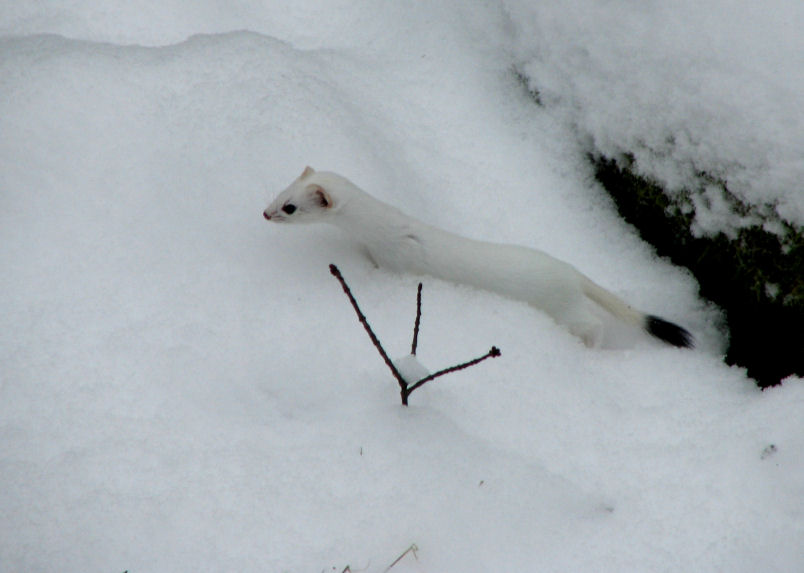
Ermine, Short-tailed Weasel, or Stoat
Mustela erminea


Ron Logan shared this photo of an ermine in his winter coat. In the summer it has a sandy brown coat that is shorter and sparser than the winter one. Both coats have black fur on the tip of the tail. In spring the molt begins slowly at the forehead, travels across the back, and then proceeds to the belly. In fall the molt is quicker and travels in the reverse direction.
     Male ermine are larger than females - ranging from 7.4 inches to 12.8, females between 6.7 to 10.6 inches.
     Ermine take over nests used by rodent prey and use rodent skins to warm the nest. They mate from April through July with a gestation period of 280 days.
     Like skunks, ermine have large anal scent glands that excrete a musky order when attacked.


Bangor Land Trust

P.O. Box 288
9 Central St, #201
Bangor, ME 04401
207-942-1010
[email protected]
EIN/Tax ID: 
33-0997433​

Subscribe to E-News & Updates

* indicates required

Connect

Picture
Picture
Picture
  • About Us
    • Mission & Core Values
    • Our Board & Staff
    • Newsletters >
      • Spring 2025
      • Fall 2024
      • Spring 2024
    • Accreditation Notice
    • Contact Us
  • Explore Our Preserves
    • Trail Map and Descriptions
    • Central Penjajawoc
    • Levant Wetlands
    • Northeast Penjajawoc
    • North Penjajawoc Forest
    • Walden-Parke
    • West Penjajawoc Grasslands
    • Map of Conserved Land
  • Events
  • Resources
    • Soundscape
    • Hunting
    • Dog Policy
    • FAQ
    • Nature Bingo >
      • Spring Flowers
      • Summer Flowers & Animals
      • Tree Leaves
      • Tree Bark Matching
      • Ferns
      • Winter Habitat
    • Scouting >
      • Boy Scout Merit Badges
      • Girl Scout Badges
  • Support
    • Donate
    • Volunteer
    • Business Sponsors