• About Us
    • Mission & Core Values
    • Our Board & Staff
    • Newsletters >
      • Spring 2025
      • Fall 2024
      • Spring 2024
    • Accreditation Notice
    • Contact Us
  • Explore Our Preserves
    • Trail Map and Descriptions
    • Central Penjajawoc
    • Levant Wetlands
    • Northeast Penjajawoc
    • North Penjajawoc Forest
    • Walden-Parke
    • West Penjajawoc Grasslands
    • Map of Conserved Land
  • Events
  • Resources
    • Soundscape
    • Hunting
    • Dog Policy
    • FAQ
    • Nature Bingo >
      • Spring Flowers
      • Summer Flowers & Animals
      • Tree Leaves
      • Tree Bark Matching
      • Ferns
      • Winter Habitat
    • Scouting >
      • Boy Scout Merit Badges
      • Girl Scout Badges
  • Support
    • Donate
    • Volunteer
    • Business Sponsors
Bangor Land Trust
  • About Us
    • Mission & Core Values
    • Our Board & Staff
    • Newsletters >
      • Spring 2025
      • Fall 2024
      • Spring 2024
    • Accreditation Notice
    • Contact Us
  • Explore Our Preserves
    • Trail Map and Descriptions
    • Central Penjajawoc
    • Levant Wetlands
    • Northeast Penjajawoc
    • North Penjajawoc Forest
    • Walden-Parke
    • West Penjajawoc Grasslands
    • Map of Conserved Land
  • Events
  • Resources
    • Soundscape
    • Hunting
    • Dog Policy
    • FAQ
    • Nature Bingo >
      • Spring Flowers
      • Summer Flowers & Animals
      • Tree Leaves
      • Tree Bark Matching
      • Ferns
      • Winter Habitat
    • Scouting >
      • Boy Scout Merit Badges
      • Girl Scout Badges
  • Support
    • Donate
    • Volunteer
    • Business Sponsors
Picture
15 October 2014
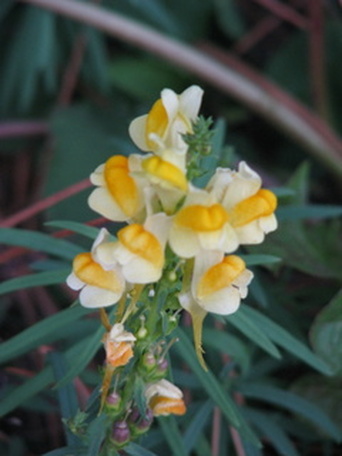
Butter and Eggs, Common Toadflax or Yellow Toadflax
Linaria vulgaris

The Butter and Eggs flower is similar to a snapdragon flower. It is mostly pale yellow with an orange tip. The plant grows from one to two feet tall and always has many blossoms near the top (borne on dense terminal racemes). Note the thin, blue-green leaves and the globose capsules below the flowers that contain many small seeds.  It is a ruderal plant, one of the first to colonize in disturbed lands. Around here you find them on roadsides, in waste places and dry fields. This one was found on York Street in downtown Bangor.

​Photo by Donne Sinderson


Bangor Land Trust

P.O. Box 288
9 Central St, #201
Bangor, ME 04401
207-942-1010
[email protected]
EIN/Tax ID: 
33-0997433​

Subscribe to E-News & Updates

* indicates required

Connect

Picture
Picture
Picture
  • About Us
    • Mission & Core Values
    • Our Board & Staff
    • Newsletters >
      • Spring 2025
      • Fall 2024
      • Spring 2024
    • Accreditation Notice
    • Contact Us
  • Explore Our Preserves
    • Trail Map and Descriptions
    • Central Penjajawoc
    • Levant Wetlands
    • Northeast Penjajawoc
    • North Penjajawoc Forest
    • Walden-Parke
    • West Penjajawoc Grasslands
    • Map of Conserved Land
  • Events
  • Resources
    • Soundscape
    • Hunting
    • Dog Policy
    • FAQ
    • Nature Bingo >
      • Spring Flowers
      • Summer Flowers & Animals
      • Tree Leaves
      • Tree Bark Matching
      • Ferns
      • Winter Habitat
    • Scouting >
      • Boy Scout Merit Badges
      • Girl Scout Badges
  • Support
    • Donate
    • Volunteer
    • Business Sponsors