• About Us
    • Mission & Core Values
    • Our Board & Staff
    • Newsletters >
      • Fall/Winter 2025
      • Spring 2025
      • Fall 2024
      • Spring 2024
    • Contact Us
  • Explore Our Preserves
    • Trail Map and Descriptions
    • Central Penjajawoc
    • Levant Wetlands
    • Northeast Penjajawoc
    • North Penjajawoc Forest
    • Walden-Parke
    • West Penjajawoc Grasslands
    • Map of Conserved Land
  • Events
  • Resources
    • Soundscape
    • Hunting
    • Dog Policy
    • FAQ
    • Nature Bingo >
      • Spring Flowers
      • Summer Flowers & Animals
      • Tree Leaves
      • Tree Bark Matching
      • Ferns
      • Winter Habitat
    • Scouting >
      • Boy Scout Merit Badges
      • Girl Scout Badges
  • Shop
  • Support
    • Donate
    • Volunteer
    • Business Sponsors
Bangor Land Trust
  • About Us
    • Mission & Core Values
    • Our Board & Staff
    • Newsletters >
      • Fall/Winter 2025
      • Spring 2025
      • Fall 2024
      • Spring 2024
    • Contact Us
  • Explore Our Preserves
    • Trail Map and Descriptions
    • Central Penjajawoc
    • Levant Wetlands
    • Northeast Penjajawoc
    • North Penjajawoc Forest
    • Walden-Parke
    • West Penjajawoc Grasslands
    • Map of Conserved Land
  • Events
  • Resources
    • Soundscape
    • Hunting
    • Dog Policy
    • FAQ
    • Nature Bingo >
      • Spring Flowers
      • Summer Flowers & Animals
      • Tree Leaves
      • Tree Bark Matching
      • Ferns
      • Winter Habitat
    • Scouting >
      • Boy Scout Merit Badges
      • Girl Scout Badges
  • Shop
  • Support
    • Donate
    • Volunteer
    • Business Sponsors
6 November 2017
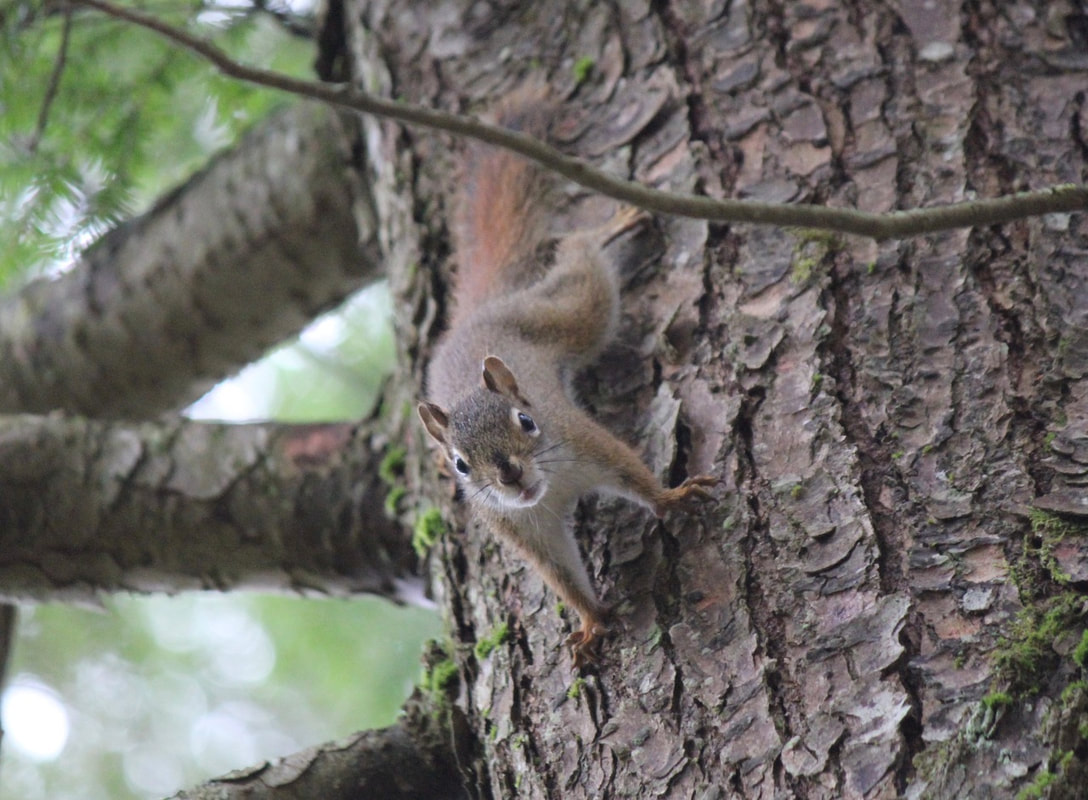
American Red Squirrel
Tamiasciurus hudsonicus

Red squirrels have red fur with a white underbelly, are smaller than gray squirrels, and a little larger than chipmunks. Their primary food source is seed from conifer cones but they also eat conifer buds and needles, mushrooms, willow leaves, poplar buds and catkins, flowers and berries. Certain mushrooms, that are poisonous to humans, can be eaten by red squirrels without harm. They are very territorial. Females build their nests with grass in tree cavities or branches. They will often have more than one nest and move their young between the nests to keep them safe. 
Picture

CONTACT US

Mailing Address:
P.O. Box 288
Bangor, ME 04402

Office Address:
9 Central St, #201
Bangor, ME 04401

(207) 942-1010
[email protected]
​
EIN/Tax ID: 
33-0997433​

Subscribe to E-News & Updates

* indicates required

Connect

Picture
Picture
Picture
  • About Us
    • Mission & Core Values
    • Our Board & Staff
    • Newsletters >
      • Fall/Winter 2025
      • Spring 2025
      • Fall 2024
      • Spring 2024
    • Contact Us
  • Explore Our Preserves
    • Trail Map and Descriptions
    • Central Penjajawoc
    • Levant Wetlands
    • Northeast Penjajawoc
    • North Penjajawoc Forest
    • Walden-Parke
    • West Penjajawoc Grasslands
    • Map of Conserved Land
  • Events
  • Resources
    • Soundscape
    • Hunting
    • Dog Policy
    • FAQ
    • Nature Bingo >
      • Spring Flowers
      • Summer Flowers & Animals
      • Tree Leaves
      • Tree Bark Matching
      • Ferns
      • Winter Habitat
    • Scouting >
      • Boy Scout Merit Badges
      • Girl Scout Badges
  • Shop
  • Support
    • Donate
    • Volunteer
    • Business Sponsors